
What to Do After Eating More Than Planned?
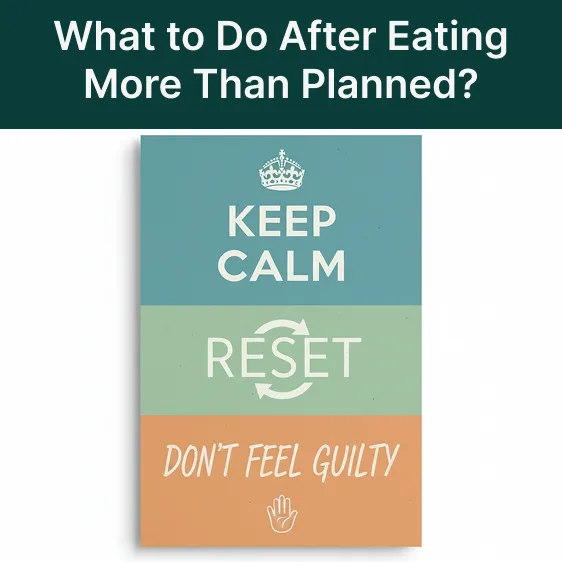
Eating more than planned can feel bigger than it is.
Maybe it was a dinner out, a celebration, a stressful evening, a holiday meal, or one of those nights where snacks kept turning into more snacks.
The next morning, it is easy to think:
“I ruined my progress.”
“I need to fix this today.”
“I should skip breakfast.”
“I need to burn it off.”
You do not need to panic.
One higher-calorie day does not erase your progress. Your body does not reset overnight. What matters more is what you do next — and the best next step is usually calmer than you think.
This guide will help you recover after overeating without guilt, punishment, or starting over.
Quick Answer
If you ate more than planned, do not skip meals, punish yourself with exercise, or try to “fix” it in one day. Drink water, return to normal meals, include protein, go for light movement if you feel up to it, and look at your weekly average instead of judging one meal or one day. One higher-calorie day may shift the scale temporarily, but it does not erase your progress.
First: one day is not the full picture
Your body weight may be higher the next day. That does not automatically mean you gained fat.
After a larger meal, the scale can move up because of:
More food still sitting in your digestive system
More sodium
More carbs, which can increase stored water
Less sleep
Alcohol
Later meal timing
Normal daily fluctuation
This is why daily weigh-ins can feel dramatic when weekly trends are much more useful.
A better question is not:
“Did I mess up yesterday?”
A better question is:
“What does my full week look like?”
If your weekly average is still close to your target, one higher day may barely change the overall trend. If it pushed the week up, you can adjust gently — not aggressively.
What not to do the next day?
After overeating, avoid turning recovery into punishment.
Try not to:
Skip meals to “make up for it”
Do a very low-calorie crash day
Force a hard workout when you feel uncomfortable
Cut out entire food groups
Keep weighing yourself repeatedly
Label the day as a failure
Turn one high day into a full week of “I’ll restart Monday”
These reactions can make the cycle worse. Restricting too hard the next day can increase hunger, cravings, and the chance of overeating again later.
The goal is not to compensate.
The goal is to return to baseline.
Your calm next-day plan
Here is a simple plan you can follow the day after eating more than planned.
1. Start with water
Drink water when you wake up.
You do not need a detox drink, fat-burning tea, or anything extreme. Just hydrate normally.
If the meal was salty, hydration can help you feel less sluggish. You can also include normal fluids through the day: water, tea, coffee, sparkling water, or whatever helps you return to your usual rhythm.
A good rule: drink enough that your urine is pale yellow most of the day.
2. Eat a normal breakfast or first meal
You do not have to eat immediately if you are not hungry.
But do not force a long fast as punishment.
When you are ready to eat, make the meal simple and steady. Aim for:
A protein source
A high-fibre carb or fruit/vegetable
Some healthy fat if it fits your usual meals
Examples:
Eggs or tofu with toast and fruit
Greek yoghurt with berries and oats
Paneer or tofu wrap with vegetables
Dal, rice, and vegetables
Protein smoothie with fruit
Cottage cheese bowl with fruit
The point is not to create a “perfect” meal. The point is to send your body a clear signal: we are back to normal.
3. Keep meals predictable
After overeating, your hunger cues may feel slightly off.
That is normal.
Instead of waiting until you are extremely hungry, plan 2–3 steady meals across the day. You can keep them slightly lighter if you genuinely prefer, but they should still be real meals.
A useful structure:
Protein at each meal
Vegetables or fruit where possible
Carbs based on your normal routine
Enough food to avoid rebound hunger
This keeps the day stable without turning it into a punishment plan.
4. Go for light movement
A walk is usually enough.
You do not need to “burn off” the meal. You are not trying to cancel yesterday. You are just helping your body feel better and rebuilding rhythm.
Try:
20–45 minutes of walking
A light bike session
Easy swimming
Gentle mobility
A normal workout if you feel good
If your stomach still feels heavy, choose walking over intense exercise.
A hard workout can wait. Consistency does not require panic.
5. Put the day into weekly context
This is the most important step.
Look at your week, not just the day.
Ask:
What was my weekly calorie target?
How much did yesterday change the average?
Do I need to adjust, or can I simply continue?
What is the smallest useful correction?
For example, if your target is 2,000 calories per day, that is 14,000 calories per week.
If you ate 2,800 calories yesterday, that is 800 calories over target.
You could respond in a few ways:
Do nothing and continue normally
Reduce 100–150 calories for a few days
Add a short walk across the week
Keep the plan unchanged if adherence has otherwise been strong
All of these are calmer than starving the next day.
A simple reset template
Use this after any higher-calorie day:
Morning: Water + normal first meal
Midday: Protein + vegetables + usual carb portion
Afternoon: Walk or light movement
Evening: Normal dinner, not a punishment meal
Before bed: Plan tomorrow’s first meal or workout
That is it.
No reset button. No guilt. No dramatic fix.
What if it felt like a binge?
There is a difference between eating more than planned and feeling out of control around food.
If this happens occasionally, the same calm reset still helps.
But if you often feel unable to stop eating, feel intense shame afterwards, hide eating, or try to compensate with fasting, purging, laxatives, or excessive exercise, it may be worth speaking with a qualified health professional.
You deserve support, not judgment.
How to prevent the next spiral?
You do not need to prevent every higher-calorie day. Social meals, holidays, travel, and celebrations are part of real life.
But you can prevent the spiral after them.
Try these rules:
Do not miss twice
One higher day is just one day.
The next meal is your restart point.
Keep protein steady
Protein helps meals feel more satisfying and keeps your structure in place.
Plan flexible meals
If you know dinner will be bigger, keep breakfast and lunch simple — not tiny.
Stop using “all or nothing” language
You are not “good” on low-calorie days and “bad” on high-calorie days.
You are collecting data.
Track the week
A single day can feel emotional. A weekly average gives you context.
The main takeaway
After eating more than planned, your job is not to fix your body.
Your job is to return to your baseline.
Drink water. Eat normal meals. Move lightly. Look at the week. Continue.
One day can shift the numbers.
It does not erase the work.
FAQs
Will I gain fat from overeating one day?
Usually, one higher-calorie day does not cause major fat gain. The scale may go up because of extra food volume, sodium, carbs, water retention, or later meal timing. Look at your weekly trend before assuming real fat gain.
Should I skip breakfast after overeating?
You do not need to skip breakfast to make up for overeating. If you are not hungry, it is okay to wait. But when you do eat, aim for a normal meal with protein, fibre, and enough food to keep the day steady.
Should I do extra cardio after eating too much?
You do not need punishment cardio. Light movement, like a walk, can help you feel better, but the goal is not to “burn off” the meal. A calm return to your normal routine is usually more helpful.
What should I eat the day after overeating?
Keep it simple: protein, vegetables or fruit, and your usual carbs or fats in normal portions. Good options include eggs or tofu with toast, Greek yoghurt with fruit, dal and rice, paneer or tofu wraps, or a balanced home-cooked meal.
Why does my weight go up after a big meal?
Your weight can increase because of food still in your digestive system, higher sodium, more stored water from carbs, poor sleep, alcohol, or normal daily fluctuations. That does not automatically mean you gained fat.
How do I get back on track after overeating?
Start with the next normal meal. Drink water, avoid guilt, move lightly if it feels good, and check your weekly context. The next meal is enough to restart.