
High-Protein Vegetarian Meals That Fit Fat Loss

High protein vegetarian meals for weight loss are completely possible.
They just need a little more structure.
That does not mean vegetarian eating is a blocker. It means protein may need to be planned more intentionally, especially if your goal is fat loss, fullness, strength, or body recomposition.
The aim is not to build perfect meals.
The aim is to build repeatable vegetarian meals that fit your calories, protein target, food preferences, and real week.
Quick Answer
The easiest way to build high-protein vegetarian meals for weight loss is to start with a protein base, add vegetables for volume, include a practical carb source, and use fats intentionally. Good vegetarian protein options include Greek yogurt, cottage cheese, paneer, tofu, tempeh, lentils, chickpeas, beans, soy products, eggs if you eat them, and protein powder when useful.
Why protein matters during fat loss?
When you are losing weight, your body is in an energy deficit.
Protein can help with:
Fullness
Muscle maintenance
Recovery from training
More balanced meals
This is especially useful if you are also lifting weights, walking more, or increasing activity.
Protein does not have to come from meat. Vegetarian and ovo-vegetarian meals can work well when they are built around reliable protein bases.
Best vegetarian protein sources for fat loss meals
Start by choosing a protein base.
Good options include:
Greek yogurt
Cottage cheese
Paneer
Tofu
Tempeh
Eggs, if ovo-vegetarian
Lentils
Chickpeas
Beans
Edamame
Soy milk
Seitan, if suitable
Protein powder, if useful
Some options are more calorie-dense than others. That does not make them bad.
Paneer, nuts, seeds, and cheese can be useful, but calories can add up quickly. Tofu, Greek yogurt, lentils, egg whites, and cottage cheese may be easier to fit into lower-calorie meals.
Use vegetarian meal templates, not rigid meal plans
A vegetarian protein meal plan is easier to follow when it is flexible.
Instead of copying a strict plan, use templates you can repeat.
Here are practical high-protein vegetarian meal templates.
Template 1: High-protein yogurt bowl

Protein base: Greek yogurt or high-protein yogurt
Add: Berries, chia seeds, cinnamon, or a small amount of granola
Best for: Breakfast, snack, or dessert-style meal
Why it works: It is quick, protein-forward, and easy to adjust. If calories are tight, reduce the granola. If protein is low, increase yogurt or add protein powder.
Template 2: Tofu or paneer bowl

Protein base: Tofu or paneer
Carb: Rice, quinoa, potatoes, or roti
Volume: Capsicum, spinach, mushrooms, broccoli, tomato, cucumber
Flavour: Garlic, ginger, chilli, soy sauce, spices, yogurt-based dressing
Why it works: It gives you protein, carbs, and vegetables in one plate. Tofu is usually easier to keep lower-calorie. Paneer can work too, especially if you use a lower-fat version or manage the portion.
Template 3: Lentil or chickpea plate
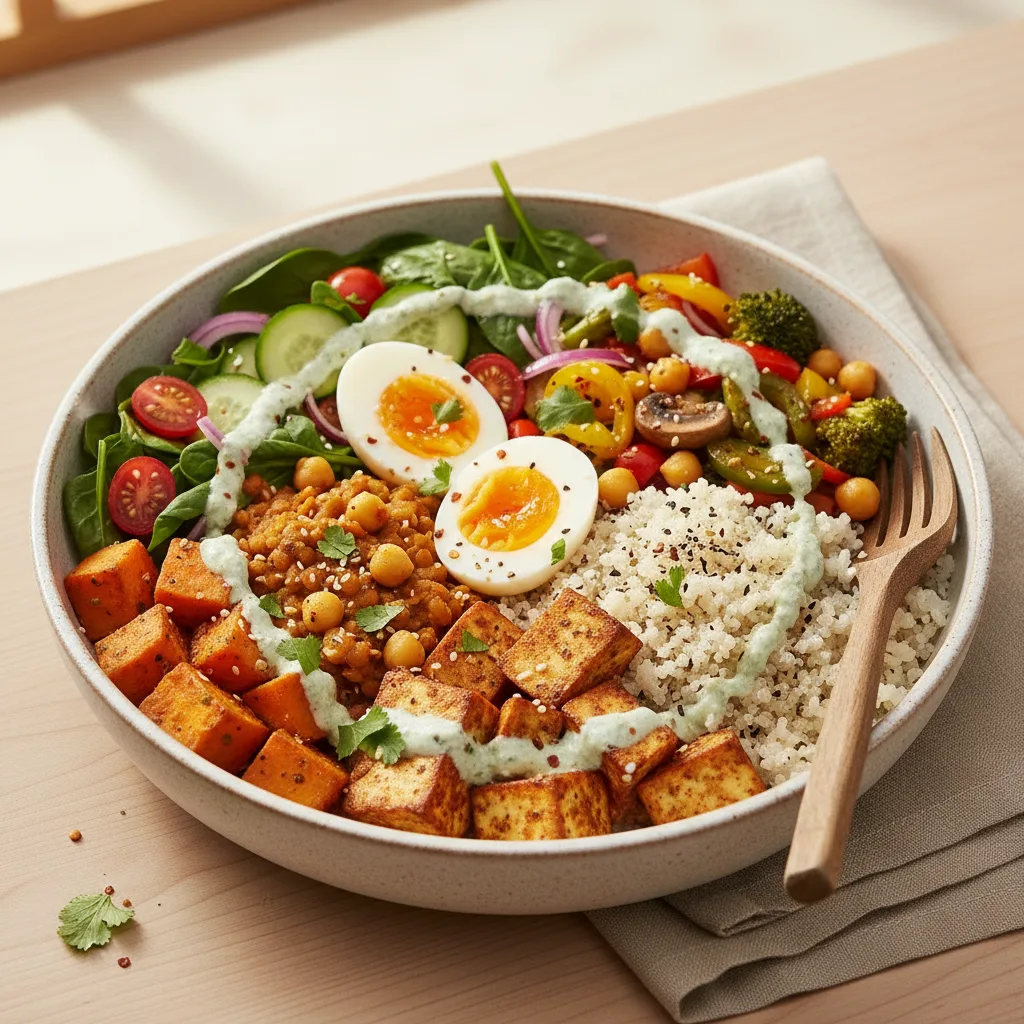
Protein base: Lentils, dal, chickpeas, or beans
Carb: Rice, roti, potatoes, or quinoa
Volume: Salad, cooked vegetables, soup, or yogurt side
Optional protein boost: Greek yogurt, tofu, paneer, cottage cheese, or eggs
Why it works: Legumes bring protein and fiber together, which can support fullness. If the protein is still low for your target, add a second protein source.
Template 4: Ovo-vegetarian egg meal

Protein base: Eggs, egg whites, or both
Carb: Toast, wrap, rice, or potatoes
Volume: Mushrooms, spinach, onions, tomatoes, salsa, cucumber
Optional boost: Cottage cheese or Greek yogurt
Why it works: Eggs are flexible and easy to build around. Egg whites can raise protein without adding many calories, while whole eggs add fat, flavour, and structure.
Template 5: High-protein vegetarian wrap

Protein base: Tofu, paneer, eggs, tempeh, or cottage cheese
Add: Wrap, salad, pickles, chutney, salsa, or yogurt sauce
Adjust: Use lighter sauces if calories are tight
Why it works: Wraps are easy to repeat and modify. They also work well for meal prep because the protein base can be cooked in advance.
Template 6: “Tempted to order in” bowl

This is for the moment when cooking feels like too much.
Protein base: Tofu, paneer, eggs, Greek yogurt, cottage cheese, or lentils
Add: Microwave rice, ready salad, frozen vegetables, or leftover vegetables
Flavour: Sauce, chilli, chutney, spices, salsa, or yogurt dressing
Why it works: It does not need to be perfect. It just needs to be easier than starting from scratch.
How to adjust vegetarian meals when protein is low?
If a meal is low in protein, try one of these:
Add Greek yogurt on the side
Add tofu or tempeh
Add cottage cheese
Use egg whites if suitable
Use soy milk instead of lower-protein milk
Choose higher-protein pasta or wraps
Increase the main protein portion
Add protein powder where convenient
You do not need every meal to be high-protein. But if most meals are low-protein, hitting your day’s target becomes harder.
Vegetarian fat-loss plate method
A simple plate structure:
1/4 to 1/3 plate: protein base
1/4 plate: carbs
1/2 plate: vegetables or high-volume foods
Add fats intentionally: oil, nuts, cheese, seeds, dressings
This keeps the meal balanced without making it feel like a spreadsheet.
Vegan and Jain-friendly protein options
Vegan and Jain diets can still support fat loss, but the protein strategy may look different.
For vegan meals, useful options may include:
Tofu
Tempeh
Lentils
Chickpeas
Beans
Soy milk
Seitan, if suitable
Vegan protein powder
For Jain meals, options depend on the level of restriction followed. Dairy, paneer, yogurt, lentils, beans, nuts, seeds, and allowed grains may become more important.
The goal is not to force one standard meal plan onto every diet. The goal is to build the best workable version for your food preferences.
FAQs
Can vegetarians eat enough protein for fat loss?
Yes. Vegetarian diets can provide enough protein with planning. The easiest approach is to build meals around protein bases like tofu, tempeh, lentils, beans, Greek yogurt, cottage cheese, paneer, eggs, or soy foods.
What vegetarian foods are highest in protein?
Common high-protein vegetarian foods include Greek yogurt, cottage cheese, paneer, tofu, tempeh, lentils, beans, chickpeas, edamame, eggs, seitan, and soy milk.
Is paneer good for fat loss?
Paneer can fit into fat loss, especially as a protein source. It can also be calorie-dense, so portion size matters. Lower-fat paneer may be easier to fit into a calorie deficit.
How do I hit protein without meat?
Start each meal with a vegetarian protein base. Then add a second protein source if needed, such as yogurt with lentils, tofu with rice, paneer with vegetables, or eggs with cottage cheese.
Are high-protein vegetarian meals good for weight loss?
They can be. Protein-forward vegetarian meals can support fullness and help make a calorie deficit easier to manage. Calories still matter, but protein can make the plan more workable.