
Vietnamese Street Food Calories: How to Eat Street Food and Snacks Without Losing Your Week
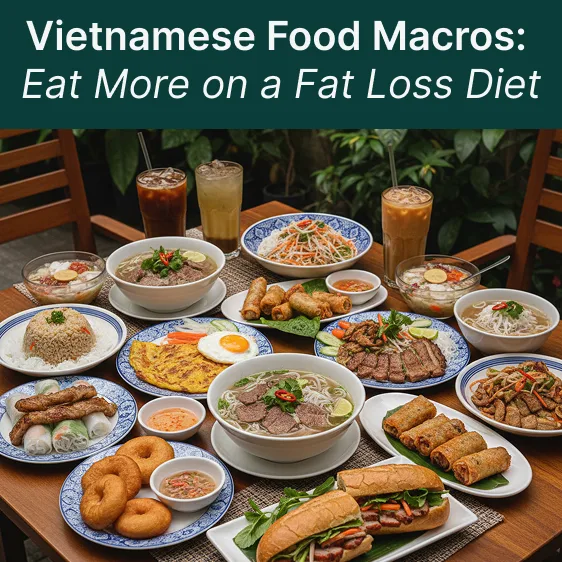
Vietnamese street food can absolutely fit into a fat-loss or fitness plan.
You do not need to avoid bánh mì, phở, gỏi cuốn, chả giò, bún chả, bánh xèo, chè, or Vietnamese iced coffee completely.
The key is understanding what each food usually gives you.
A lot of Vietnamese street food is built around rice noodles, rice paper, baguettes, herbs, vegetables, grilled meats, fried wrappers, coconut milk, sugar, and sauces.
That does not make any of it bad.
It just means the meal may need a little structure around it.
This guide breaks down popular Vietnamese street foods and snacks, approximate macros, what to balance, what to watch, and how to make each option more protein-rich.
Quick Answer
Most Vietnamese street foods are built around rice noodles, rice paper, baguettes, herbs, meat, seafood, tofu, fried wrappers, dipping sauces, coconut milk, and sweet drinks.
Phở, bún chả, bánh mì, gỏi cuốn, bún thịt nướng, bánh cuốn, and cơm tấm can be easier to balance when they include a clear protein source.
Chả giò, bánh xèo, bánh rán, bánh tráng trộn, chè, sugarcane juice, and Vietnamese iced coffee can be more calorie-dense because of frying, oil, sugar, coconut milk, condensed milk, and toppings.
The simplest rule: enjoy the Vietnamese street food, count it as part of the meal, then make the rest of the day protein-focused and steady.
Macro Estimates: Quick Note
These macros are approximate.
Vietnamese street food varies by vendor, region, portion size, bread size, rice or noodle portion, protein portion, oil, dipping sauce, sugar, coconut milk, peanuts, and toppings.
Use these numbers as planning ranges, not exact labels.
Vietnamese Street Food and Snacks at a Glance
Vietnamese street food or snack | Typical portion | Calories | Protein | Carbs | Fat |
|---|---|---|---|---|---|
Bánh mì | 1 sandwich | 450 to 750 kcal | 20 to 40g | 55 to 90g | 15 to 35g |
Phở bò or phở gà | 1 bowl | 400 to 700 kcal | 25 to 45g | 55 to 90g | 8 to 25g |
Gỏi cuốn | 2 rolls | 180 to 350 kcal | 10 to 22g | 25 to 45g | 3 to 12g |
Chả giò | 3 pieces | 300 to 550 kcal | 10 to 22g | 30 to 55g | 15 to 35g |
Bún chả | 1 bowl or plate | 500 to 850 kcal | 25 to 45g | 65 to 100g | 15 to 40g |
Bún thịt nướng | 1 bowl | 550 to 900 kcal | 25 to 45g | 70 to 110g | 18 to 45g |
Bánh xèo | 1 pancake | 450 to 800 kcal | 15 to 35g | 45 to 80g | 20 to 45g |
Bánh cuốn | 1 plate | 350 to 650 kcal | 15 to 30g | 55 to 85g | 8 to 25g |
Cơm tấm | 1 plate | 650 to 1,000 kcal | 30 to 55g | 80 to 120g | 20 to 50g |
Xôi mặn | 1 serving | 500 to 850 kcal | 15 to 35g | 75 to 115g | 15 to 40g |
Bánh tráng trộn | 1 bag or bowl | 350 to 650 kcal | 8 to 20g | 50 to 85g | 10 to 30g |
Nem nướng cuốn | 2 rolls | 300 to 550 kcal | 15 to 30g | 35 to 65g | 10 to 28g |
Bò bía | 2 rolls | 200 to 400 kcal | 8 to 18g | 30 to 55g | 5 to 18g |
Bánh rán or bánh cam | 1 piece | 250 to 450 kcal | 4 to 8g | 35 to 60g | 10 to 25g |
Chè | 1 bowl or cup | 250 to 550 kcal | 4 to 12g | 45 to 90g | 6 to 25g |
Cà phê sữa đá | 1 cup | 120 to 250 kcal | 2 to 6g | 20 to 45g | 3 to 10g |
Nước mía | 1 cup | 150 to 300 kcal | 0 to 2g | 35 to 75g | 0 to 2g |
The Vietnamese Street Food Balance Rule
If the food is mostly rice noodles, baguette, sticky rice, fried wrapper, sugar, or coconut milk, add protein before or after.
Examples:
Bánh mì plus a lighter protein-focused dinner
Chả giò is a side, not the whole meal by default
Chè after a proper meal, not as lunch
Bánh tráng trộn with eggs, beef jerky, chicken, tofu, or seafood if available
Vietnamese iced coffee is treated as part of the snack, not just a drink
If the food already has protein, keep the extras controlled.
Examples:
Phở with beef or chicken and a normal noodle portion
Gỏi cuốn with prawns, pork, tofu, or chicken
Bún chả with grilled pork and plenty of herbs
Bánh xèo with prawns, pork, tofu, or egg
Cơm tấm with grilled pork, egg, and a clear rice portion
1. Bánh Mì
Bánh mì is a Vietnamese baguette sandwich, often filled with meat, pâté, pickled vegetables, cucumber, herbs, chilli, mayo, butter, or sauces.
It can be a strong street food meal because it usually has protein.
The main calorie drivers are the baguette, mayo, butter, pâté, fatty meat, and portion size.

Approximate macros
Bánh mì type | Portion | Calories | Protein | Carbs | Fat |
|---|---|---|---|---|---|
Classic meat bánh mì | 1 sandwich | 500 to 750 kcal | 25 to 40g | 55 to 90g | 18 to 35g |
Chicken bánh mì | 1 sandwich | 450 to 700 kcal | 25 to 40g | 55 to 90g | 12 to 30g |
Tofu bánh mì | 1 sandwich | 450 to 700 kcal | 18 to 35g | 60 to 90g | 12 to 30g |
Balance it
Treat one bánh mì as a meal, not a small snack.
If it has pâté, mayo, butter, and fatty meat, keep the rest of the day lighter on added fats.
If you are also having Vietnamese iced coffee, count that as part of the meal.
Make it protein-rich
Choose grilled chicken, pork, beef, egg, tofu, or extra meat.
Ask for more cucumber, pickled vegetables, herbs, and chilli if available.
If you want a lighter version, go easy on mayo, butter, and pâté.
2. Phở
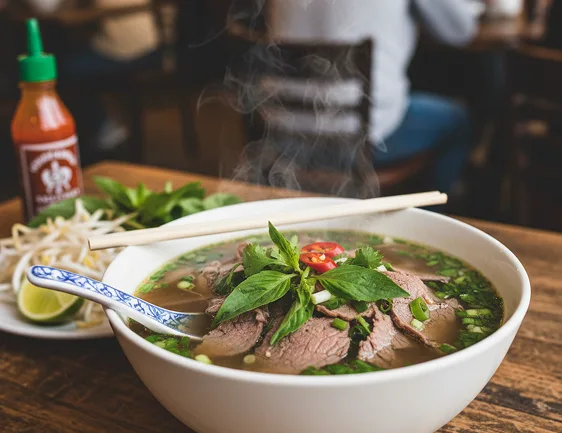
Phở is a noodle soup with broth, rice noodles, herbs, and protein like beef, chicken, meatballs, or tofu.
It can be one of the easier Vietnamese street foods to balance because it includes broth, herbs, and protein.
The main things to watch are the noodle portion, fatty cuts of meat, and extra sauces.
Approximate macros
Phở type | Portion | Calories | Protein | Carbs | Fat |
|---|---|---|---|---|---|
Phở gà | 1 bowl | 400 to 650 kcal | 25 to 45g | 55 to 85g | 8 to 20g |
Phở bò | 1 bowl | 450 to 700 kcal | 25 to 45g | 55 to 90g | 10 to 25g |
Large bowl with extra noodles | 1 bowl | 650 to 950 kcal | 30 to 55g | 90 to 130g | 12 to 35g |
Balance it
Phở can work well as a full meal.
If you want it lighter, focus on broth, herbs, bean sprouts, and protein.
If you are very hungry, extra meat may be more helpful than extra noodles.
Watch the sauces if you add a lot of hoisin, chilli oil, or sweet sauce.
Make it protein-rich
Choose beef, chicken, meatballs, seafood, tofu, or extra meat.
Add bean sprouts and herbs for more volume.
3. Gỏi Cuốn
Gỏi cuốn are fresh Vietnamese spring rolls usually made with rice paper, rice noodles, herbs, lettuce, prawns, pork, tofu, or chicken.
They are often lighter than fried snacks.
The main calorie variable is the dipping sauce, especially peanut sauce or hoisin-based sauce.

Approximate macros
Gỏi cuốn type | Portion | Calories | Protein | Carbs | Fat |
|---|---|---|---|---|---|
Prawn and pork rolls | 2 rolls | 180 to 350 kcal | 12 to 22g | 25 to 45g | 3 to 12g |
Tofu rolls | 2 rolls | 180 to 350 kcal | 10 to 20g | 25 to 45g | 4 to 14g |
Rolls with peanut sauce | 2 rolls | 280 to 500 kcal | 12 to 25g | 35 to 60g | 10 to 25g |
Balance it
Gỏi cuốn can be a great snack or light meal.
If you are eating it as a full meal, add enough rolls or pair it with protein.
Use sauce mindfully.
The sauce can add a lot more than the rolls themselves.
Make it protein-rich
Choose prawn, pork, chicken, tofu, egg, or extra protein fillings.
If available, ask for more protein and slightly less noodle inside the roll.
4. Chả Giò
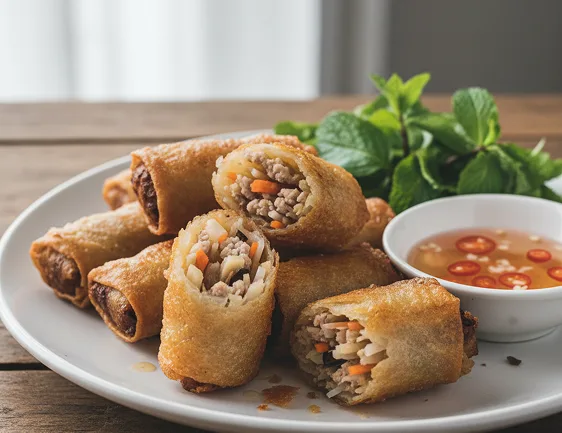
Chả giò are fried Vietnamese spring rolls.
They are usually filled with pork, prawns, mushrooms, glass noodles, vegetables, or other fillings, then fried.
They can fit well, but they are more calorie-dense than fresh rolls because of frying.
Approximate macros
Portion | Calories | Protein | Carbs | Fat |
|---|---|---|---|---|
2 chả giò | 200 to 400 kcal | 8 to 16g | 20 to 40g | 10 to 25g |
3 chả giò | 300 to 550 kcal | 10 to 22g | 30 to 55g | 15 to 35g |
Balance it
Treat chả giò as the fried part of the meal.
If you have it with noodles, rice, and sweet sauce, count all of that together.
Pair with herbs, lettuce, cucumber, and a protein-focused main if needed.
Make it protein-rich
Choose pork, prawn, chicken, crab, tofu, or mushroom fillings.
If the rolls are mostly wrappers and noodles, keep the next meal protein-focused.
5. Bún Chả
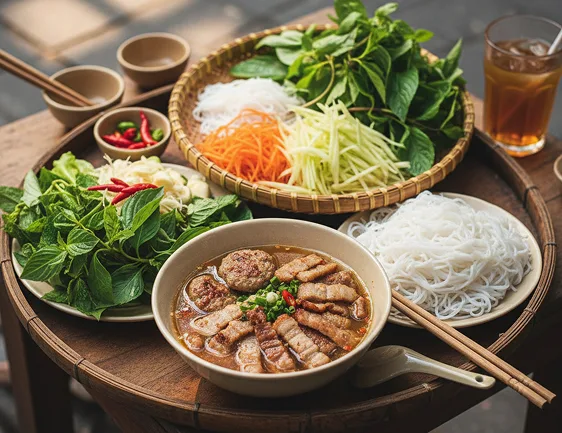
Bún chả is usually grilled pork served with rice noodles, herbs, dipping sauce, and sometimes fried spring rolls.
It can be a balanced meal because it has protein, carbs, herbs, and sauce.
The main calorie drivers are pork fat, noodle portion, sugar in the dipping sauce, and any fried spring rolls on the side.
Approximate macros
Portion | Calories | Protein | Carbs | Fat |
|---|---|---|---|---|
Bún chả without spring rolls | 1 serving | 500 to 750 kcal | 25 to 45g | 65 to 95g |
Bún chả with spring rolls | 1 serving | 650 to 950 kcal | 30 to 55g | 80 to 115g |
Balance it
Bún chả can be a full meal.
If spring rolls are included, treat them as part of the plate, not a small extra.
Use the herbs and vegetables generously.
If the pork is fatty, keep the next meal lighter on added fats.
Make it protein-rich
Ask for extra grilled meat if available.
If you want it lighter, keep the noodle portion clear and add more herbs, lettuce, cucumber, and protein.
6. Bún Thịt Nướng
Bún thịt nướng is a rice noodle bowl with grilled meat, herbs, vegetables, fish sauce dressing, peanuts, and sometimes spring rolls.
It can be filling and protein-friendly.
The main things to watch are the noodle portion, fatty meat, peanuts, oil, sweet dressing, and fried spring roll add-ons.

Approximate macros
Bowl type | Portion | Calories | Protein | Carbs | Fat |
|---|---|---|---|---|---|
Grilled pork noodle bowl | 1 bowl | 550 to 850 kcal | 25 to 45g | 70 to 105g | 18 to 40g |
Bowl with spring rolls | 1 bowl | 700 to 1,000 kcal | 30 to 55g | 85 to 125g | 25 to 55g |
Tofu noodle bowl | 1 bowl | 500 to 800 kcal | 20 to 40g | 70 to 105g | 15 to 35g |
Balance it
This can be a strong meal if the protein portion is clear.
If you add spring rolls, keep dessert or sweet drinks simpler.
Use herbs, cucumber, lettuce, and pickled vegetables to make the bowl more filling.
Make it protein-rich
Choose grilled pork, chicken, beef, prawns, tofu, or egg.
Ask for extra protein if available, especially if the bowl is mostly noodles.
7. Bánh Xèo
Bánh xèo is a crispy Vietnamese pancake made with rice flour, turmeric, coconut milk or water, and fillings like prawns, pork, bean sprouts, mushrooms, or tofu.
It is often eaten with lettuce, herbs, and dipping sauce.
It can be delicious and filling, but the calories depend heavily on oil, pancake size, and filling.

Approximate macros
Bánh xèo type | Portion | Calories | Protein | Carbs | Fat |
|---|---|---|---|---|---|
Prawn and pork bánh xèo | 1 pancake | 500 to 800 kcal | 20 to 35g | 45 to 80g | 25 to 45g |
Vegetarian or tofu bánh xèo | 1 pancake | 450 to 750 kcal | 15 to 30g | 50 to 85g | 20 to 40g |
Smaller bánh xèo | 1 piece | 300 to 500 kcal | 10 to 22g | 35 to 60g | 12 to 28g |
Balance it
Treat bánh xèo as a full meal if the pancake is large.
Use the herbs and lettuce generously.
If it is oily, keep the rest of the day lighter on added fats.
Watch the dipping sauce if it is sweet or used heavily.
Make it protein-rich
Choose prawns, pork, chicken, egg, tofu, or extra filling.
If the pancake is mostly batter and bean sprouts, make the next meal protein-focused.
8. Bánh Cuốn
Bánh cuốn are steamed rice rolls, often filled with minced pork and mushrooms, and served with herbs, cucumber, fish sauce, and sometimes Vietnamese sausage.
They can be lighter than fried options, but they are still mostly rice-based.

Approximate macros
Portion | Calories | Protein | Carbs | Fat |
|---|---|---|---|---|
Bánh cuốn with pork filling | 1 plate | 350 to 600 kcal | 15 to 30g | 55 to 85g |
Bánh cuốn with sausage | 1 plate | 450 to 700 kcal | 20 to 35g | 55 to 90g |
Balance it
This can be a good breakfast or light meal.
If the plate is mostly rice rolls, add protein later.
If sausage is included, count it as protein and fat.
Make it protein-rich
Choose pork, mushroom, egg, chicken, tofu, or extra sausage if it fits your day.
Add herbs, cucumber, and vegetables where available.
9. Cơm Tấm
Cơm tấm is broken rice, often served with grilled pork chop, shredded pork skin, egg meatloaf, fried egg, pickled vegetables, and fish sauce.
It can be very satisfying and protein-rich.
It can also become calorie-dense because of the rice portion, pork fat, oil, egg, sauces, and multiple toppings.

Approximate macros
Cơm tấm type | Portion | Calories | Protein | Carbs | Fat |
|---|---|---|---|---|---|
Grilled pork rice plate | 1 plate | 650 to 900 kcal | 30 to 50g | 80 to 115g | 20 to 45g |
Full combo with egg and meatloaf | 1 plate | 800 to 1,100 kcal | 40 to 65g | 85 to 125g | 30 to 60g |
Balance it
Treat cơm tấm as a full meal.
If you choose the full combo, that may be enough without extra sides.
Use pickled vegetables and cucumber for volume.
Keep sweet drinks simple if the plate is large.
Make it protein-rich
It is already protein-friendly when it includes grilled pork, egg, or meatloaf.
The better move is to manage the rice portion, sauces, and extra fatty toppings.
10. Xôi Mặn
Xôi mặn is savoury sticky rice, often topped with meat, egg, sausage, pork floss, fried shallots, mung bean, or other toppings.
It is filling, but sticky rice is dense.
It can become calorie-dense quickly when combined with oily toppings and processed meats.

Approximate macros
Xôi type | Portion | Calories | Protein | Carbs | Fat |
|---|---|---|---|---|---|
Savoury sticky rice | 1 serving | 500 to 850 kcal | 15 to 35g | 75 to 115g | 15 to 40g |
Sweet sticky rice | 1 serving | 350 to 650 kcal | 6 to 15g | 75 to 120g | 5 to 25g |
Balance it
Treat xôi as a meal, not a light snack.
If it is mostly sticky rice, add protein later.
If it has sausage, egg, meat, and fried shallots, keep the next meal lighter on added fats.
Make it protein-rich
Choose egg, chicken, pork, tofu, mung bean, or extra meat toppings.
If you want a lighter version, keep the sticky rice portion smaller and add more protein.
11. Bánh Tráng Trộn
Bánh tráng trộn is a Vietnamese rice paper salad snack, often mixed with dried beef, egg, peanuts, herbs, chilli, sauce, oil, and sometimes mango.
It can feel like a light snack, but oil, peanuts, dried beef, and sauce can make it more calorie-dense.

Approximate macros
Portion | Calories | Protein | Carbs | Fat |
|---|---|---|---|---|
1 bag or bowl bánh tráng trộn | 350 to 650 kcal | 8 to 20g | 50 to 85g | 10 to 30g |
Balance it
Treat it as a proper snack.
If you are having it between meals, make the next meal protein-focused.
Watch the portion size because it is easy to keep eating.
Make it protein-rich
Choose versions with egg, dried beef, chicken, tofu, seafood, or extra protein if available.
Keep peanuts and oil in a portion that works for the rest of your day.
12. Nem Nướng Cuốn
Nem nướng cuốn are grilled pork sausage rolls, usually wrapped with rice paper, herbs, vegetables, and sometimes rice noodles.
They can be a balanced street food option because they include protein, herbs, and a clear portion.
The sauce can change the calories a lot.

Approximate macros
Portion | Calories | Protein | Carbs | Fat |
|---|---|---|---|---|
2 nem nướng cuốn | 300 to 550 kcal | 15 to 30g | 35 to 65g | 10 to 28g |
4 nem nướng cuốn | 600 to 1,000 kcal | 30 to 60g | 70 to 120g | 20 to 55g |
Balance it
Two rolls can work as a snack or a light meal.
Four rolls can become a full meal.
Use sauce mindfully, especially if it is thick, sweet, or peanut-based.
Make it protein-rich
Choose rolls with more grilled pork, tofu, chicken, prawns, or egg.
Ask for more herbs and vegetables if available.
13. Bò Bía
Bò bía is a fresh roll often made with rice paper, jicama, egg, Chinese sausage, dried shrimp, herbs, and sauce.
It can be lighter than fried snacks, but the sausage and sauce can add calories.

Approximate macros
Portion | Calories | Protein | Carbs | Fat |
|---|---|---|---|---|
2 bò bía rolls | 200 to 400 kcal | 8 to 18g | 30 to 55g | 5 to 18g |
4 bò bía rolls | 400 to 800 kcal | 16 to 35g | 60 to 110g | 10 to 35g |
Balance it
Bò bía can be a reasonable snack.
If you have several rolls, treat them as a meal.
Use sauce in a clear amount.
Make it protein-rich
Choose versions with egg, shrimp, sausage, tofu, or extra protein.
Pair with a protein-focused meal later if the rolls are mostly vegetables and rice paper.
14. Bánh Rán or Bánh Cam
Bánh rán and bánh cam are fried glutinous rice balls, often filled with mung bean paste and coated with sesame seeds or sugar.
They are small, but they are fried and carb-dense.
They are best treated as dessert or a planned snack.

Approximate macros
Portion | Calories | Protein | Carbs | Fat |
|---|---|---|---|---|
1 piece bánh rán or bánh cam | 250 to 450 kcal | 4 to 8g | 35 to 60g | 10 to 25g |
2 pieces | 500 to 900 kcal | 8 to 16g | 70 to 120g | 20 to 50g |
Balance it
One can fit as dessert.
Two can become a larger snack.
If you are also having Vietnamese iced coffee or chè, choose the sweet item you want most.
Make it protein-rich
You do not need to turn this into a protein food.
Enjoy it, then make the next meal protein-focused.
15. Chè
Chè is a broad category of Vietnamese sweet desserts and drinks.
It may include beans, jelly, tapioca, fruit, coconut milk, sticky rice, mung beans, lotus seeds, or sweet syrup.
Some versions have beans and give a little protein, but most are still dessert-style foods.

Approximate macros
Chè type | Portion | Calories | Protein | Carbs | Fat |
|---|---|---|---|---|---|
Bean-based chè | 1 bowl or cup | 250 to 450 kcal | 15 to 35g | 75 to 115g | 15 to 40g |
Coconut milk chè | 1 bowl or cup | 350 to 650 kcal | 6 to 15g | 75 to 120g | 5 to 25g |
Large mixed chè | 1 large cup | 450 to 700 kcal | 6 to 14g | 75 to 120g | 12 to 30g |
Balance it
Treat chè as dessert.
If you already had a large meal, share it or choose a smaller cup.
If chè is the thing you really want, keep the main meal simpler.
Make it protein-rich
Bean-based chè may give a little protein, but it is still usually a dessert.
The easier move is to make the meal before or after protein focused.
16. Cà Phê Sữa Đá
Cà phê sữa đá is Vietnamese iced coffee with condensed milk.
It is delicious, but it can be easy to forget because it is a drink.
The condensed milk makes it more like a sweet snack than black coffee.

Approximate macros
Drink | Portion | Calories | Protein | Carbs | Fat |
|---|---|---|---|---|---|
Cà phê sữa đá | 1 cup | 120 to 250 kcal | 2 to 6g | 20 to 45g | 3 to 10g |
Larger or sweeter version | 1 cup | 250 to 400 kcal | 4 to 8g | 45 to 75g | 6 to 15g |
Balance it
Treat Vietnamese iced coffee as part of the meal or snack.
If you are also having bánh mì, chè, or fried sweets, count the coffee too.
If you want it lighter, ask for less condensed milk if available.
Make it protein-rich
There is no need to turn every coffee into a protein drink.
Just make sure your actual meals have enough protein.
17. Nước Mía
Nước mía is sugarcane juice.
It is refreshing, especially in hot weather, but it is mostly sugar and water.
It can fit, but it is best treated like a sweet drink.

Approximate macros
Portion | Calories | Protein | Carbs | Fat |
|---|---|---|---|---|
1 cup nước mía | 150 to 300 kcal | 0 to 2g | 35 to 75g | 0 to 2g |
Large cup | 250 to 450 kcal | 0 to 3g | 60 to 110g | 0 to 3g |
Balance it
If you want sugarcane juice, enjoy it.
Just count it as part of the snack or meal.
If the food itself is already rich, water or unsweetened tea may be the simpler drink choice.
Make it protein-rich
You do not need to.
Pair your day with protein from meals.
How to Build a Balanced Vietnamese Street Food Meal?
Use this simple structure.
Step 1: Pick the item you actually want
Do not spend calories on the option you only half wanted.
If you want bánh mì, have bánh mì.
If you want phở, have phở.
If you want chè, make room for it.
The goal is not to choose the lowest calorie option every time.
The goal is to make a choice you enjoy and still move on from.
Step 2: Check the protein
Ask yourself:
Where is the protein?
If the answer is unclear, add protein before, after, or at the next meal.
Good Vietnamese street food protein options include:
Grilled pork
Chicken
Beef
Prawns
Fish
Tofu
Egg
Pork sausage
Meatballs
Seafood
Gỏi cuốn with protein
Phở with extra meat
Bún bowls with grilled protein
Step 3: Keep the extras controlled
The usual extras are:
Extra noodles
Extra rice
Large baguette portions
Fried spring rolls
Fried toppings
Peanut sauce
Sweet dipping sauces
Coconut milk
Condensed milk
Sweet drinks
Dessert after a large meal
Pick the extras that are worth it.
Skip the ones you do not care about.
Step 4: Use the next meal to balance
A good next meal is simple:
Protein
Vegetables
Moderate carbs
Measured fats
No punishment meal needed.
Just return to your normal structure.
What to Avoid or Balance Out?
Large rice and noodle portions
Rice and noodles are not the problem.
The portion is what matters.
Phở, bún chả, bún thịt nướng, bánh cuốn, xôi, and cơm tấm can all fit better when the rice or noodle portion is clear.
Fried snacks stacking
Chả giò, bánh rán, bánh cam, fried tofu, and fried toppings can add up quickly when stacked together.
Better move: choose one fried item and build the rest of the meal around protein, herbs, vegetables, and broth.
Sweet drinks
Cà phê sữa đá, nước mía, sweet tea, fruit shakes, and dessert drinks can add meaningful calories.
Better move: choose the drink you actually want, or keep it simple when the food itself is already rich.
Coconut milk desserts
Chè and coconut-based desserts can be delicious and calorie-dense.
Better move: enjoy a clear portion and keep the main meal simpler.
Sauce creep
Peanut sauce, hoisin-based sauce, sweet fish sauce, chilli oil, and condensed milk can move calories up quickly.
Better move: use enough sauce to enjoy the food, but avoid adding extra by default.
Low protein snacks
Bánh tráng trộn, chè, bánh rán, bánh cam, nước mía, and some sticky rice snacks may not be protein rich.
Better move: pair the day with chicken, beef, pork, prawns, tofu, eggs, fish, or another protein source.
How to Make Vietnamese Street Food More Protein Rich?
Choose protein-based fillings
Good options include:
Chicken
Beef
Pork
Prawns
Fish
Egg
Tofu
Seafood
Meatballs
Pork sausage
Add protein to noodle meals
For phở, bún chả, bún thịt nướng, and other noodle bowls, extra protein is often more useful than extra noodles if fullness is the goal.
Choose extra beef, chicken, pork, prawns, tofu, egg, or seafood if available.
Use herbs and vegetables for volume
Vietnamese food often comes with herbs, lettuce, cucumber, pickles, bean sprouts, and fresh vegetables.
Use them.
They help the meal feel bigger without relying only on rice, noodles, oil, or fried sides.
Choose fresh rolls more often than fried rolls
Gỏi cuốn is usually easier to fit than chả giò because it is not fried.
Both can fit.
Fresh rolls are just easier to use as a regular option.
Make the next meal protein focused
This is often the easiest fix.
If the street food was mostly rice, noodles, baguette, sticky rice, dessert, or sweet drinks, keep the next meal built around protein and vegetables.
Best Vietnamese Street Food Choices by Goal
Usually easier for lower calories
Gỏi cuốn with prawns, pork, chicken, or tofu
Phở with a moderate noodle portion
Bánh cuốn with herbs and protein
Bò bía in a clear portion
Omit or reduce fried add-ons in bún bowls
Fresh herbs, vegetables, and broth-based meals
Smaller cà phê sữa đá or less condensed milk
Usually better for protein
Phở bò
Phở gà
Bánh mì with chicken, pork, beef, egg, or tofu
Bún chả
Bún thịt nướng
Gỏi cuốn with prawns, pork, chicken, or tofu
Cơm tấm with grilled pork and egg
Nem nướng cuốn
Bánh xèo with prawns, pork, egg, or tofu
Usually more calorie dense
Large bánh mì with pâté, mayo, and fatty meat
Bún thịt nướng with spring rolls
Bún chả with extra fried rolls
Bánh xèo cooked with a lot of oil
Cơm tấm full combo
Xôi mặn
Bánh tráng trộn
Bánh rán or bánh cam
Chè with coconut milk
Cà phê sữa đá
Nước mía
These can still fit.
Just treat them as planned, calorie-dense foods and balance the rest of the day.
Simple Day Structure When Vietnamese Street Food Is Happening
If street food is in the evening
Breakfast: Greek yogurt, eggs, tofu, or a protein smoothie
Lunch: Protein, vegetables, and moderate carbs
Evening: Bánh mì, phở, bún chả, bánh xèo, or gỏi cuốn
Dinner: Protein and vegetables if still hungry
If street food is lunch
Breakfast: High protein meal
Lunch: Phở, bánh mì, bún thịt nướng, cơm tấm, or bánh cuốn
Dinner: Protein-focused and lighter on added fats
If a sweet snack is the main thing you want
Breakfast: Protein-focused
Lunch: Balanced meal with protein and vegetables
Snack: Chè, bánh rán, bánh cam, cà phê sữa đá, or nước mía
Next meal: Normal protein-based meal
If it is a social plan
Eat a normal protein-based meal earlier.
At the street food spot, pick what you actually want.
After that, go back to normal meals.
No overcorrecting needed.
Common Tracking Mistakes
Logging too low
Oil, noodles, baguette size, rice portions, sauces, coconut milk, condensed milk, and fried wrappers are easy to underestimate.
Use a realistic range.
It is better to be roughly right than perfectly wrong.
Forgetting drinks
Vietnamese iced coffee, sugarcane juice, sweet tea, and fruit shakes can be meaningful calories.
Log them like snacks, not water.
Treating herbs and vegetables as the whole meal
Herbs and vegetables add freshness and volume, but the main calories often come from noodles, rice, bread, oil, meat, sauces, and drinks.
Track the full meal.
Ignoring protein
Chè, bánh rán, bánh cam, nước mía, bánh tráng trộn, and some sticky rice snacks can be satisfying, but they may not give much protein.
Add protein somewhere else in the day.
Stacking too many extras
A meal can move up quickly when you combine:
Bánh mì
Vietnamese iced coffee
Chả giò
Chè
Sugarcane juice
You can enjoy all of these across a trip or week.
You do not need all of them in one meal unless that is the plan.
Overcorrecting later
Skipping meals after street food can make hunger worse.
A normal protein-focused meal is usually enough.
Ignoring the weekly average
One Vietnamese street food meal or snack does not define the week.
The weekly average gives a better picture.
Final Thoughts
Vietnamese street food can fit into a fat loss plan.
You do not need to remove bánh mì, phở, gỏi cuốn, chả giò, bún chả, bánh xèo, chè, or Vietnamese iced coffee from your life.
Most options simply need a little context.
Some are mostly rice, noodles, bread, or sugar.
Some already have protein.
Some are better as desserts or snacks.
Some work well as full meals.
Pick what you want, keep the portion honest, add protein where needed, and move on with your next normal meal.
A good week can include Vietnamese street food.
It just needs a little structure.
FAQs
Can I eat Vietnamese street food while losing weight?
Yes. Keep the portion clear, add protein during the day, and stay within your weekly calorie target.
Which Vietnamese street food is best for fat loss?
Usually easier options include gỏi cuốn, phở with a moderate noodle portion, bánh cuốn, bò bía, fresh herb-heavy meals, and grilled protein bowls with clear portions.
Which Vietnamese street food is highest in protein?
Good protein options include phở bò, phở gà, bánh mì with meat or tofu, bún chả, bún thịt nướng, cơm tấm with grilled pork and egg, gỏi cuốn with prawns or pork, and nem nướng cuốn.
How many calories are in bánh mì?
One bánh mì is usually around 450 to 750 calories, depending on bread size, filling, pâté, mayo, butter, meat, and sauces.
Is bánh mì good for weight loss?
Bánh mì can fit into a weight loss plan. It works best when you treat it as a full meal and keep the rest of the day protein-focused and steady.
How many calories are in phở?
One bowl of phở is usually around 400 to 700 calories, depending on noodle portion, broth, meat, toppings, and sauces.
Is phở good for fat loss?
Phở can fit well because it has broth, protein, herbs, and noodles. For a lighter option, keep the noodle portion moderate and choose enough protein.
How many calories are in gỏi cuốn?
Two fresh spring rolls are usually around 180 to 350 calories. Peanut sauce or hoisin-based sauce can add a lot, so count the sauce too.
Are Vietnamese spring rolls healthy?
Fresh spring rolls can be a balanced snack or light meal when they include prawns, pork, chicken, tofu, herbs, and vegetables. Fried spring rolls are more calorie-dense but can still fit.
How many calories are in chả giò?
Three fried spring rolls are usually around 300 to 550 calories, depending on size, filling, wrapper, oil, and dipping sauce.
Is bánh xèo high-calorie?
It can be. One bánh xèo is often around 450 to 800 calories, depending on size, oil, coconut milk, batter, and filling.
Is Vietnamese iced coffee high in calories?
It can be. One cà phê sữa đá is usually around 120 to 250 calories, mostly depending on condensed milk and serving size.
What should I eat after Vietnamese street food?
Have a normal protein-focused meal with vegetables. Good options include tofu, eggs, chicken, beef, fish, prawns, Greek yogurt, or a simple protein and vegetable plate.
How do I make Vietnamese street food more protein-rich?
Choose fillings with chicken, beef, pork, prawns, fish, tofu, egg, seafood, or meatballs. For noodle meals, extra protein is often more helpful than extra noodles.
What is the easiest way to track Vietnamese street food?
Use a realistic range. Log the rice, noodles, bread, protein, oil, sauces, fried sides, coconut milk, condensed milk, sweet drinks, and desserts. You do not need perfect numbers to make useful decisions.