
British Street Food Macros: How to Eat More Without Losing Your Week
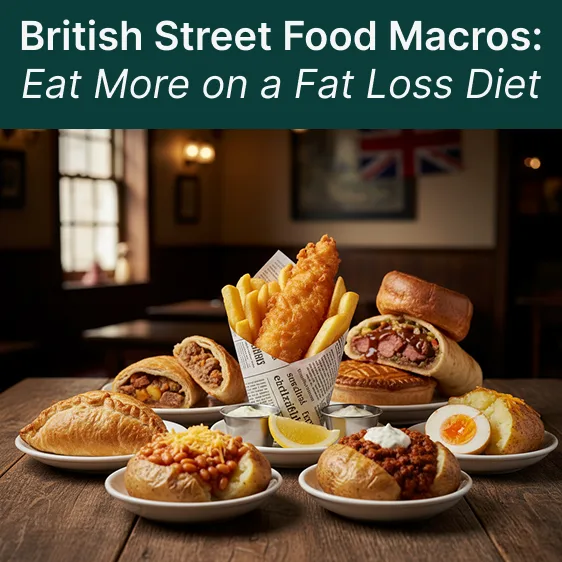
British street food and market snacks can fit into a fat loss or fitness plan. The key is knowing what each food usually gives you.
Many classic options are filling, carb-heavy, and fat-heavy. Some, like Scotch eggs and jacket potatoes with beans, bring more protein. Others, like sausage rolls, pork pies, and battered fish with chips, can be calorie-dense for the portion.
That does not mean you need to avoid them. It just means you balance the meal around protein, vegetables, portion size, and the rest of the day.
Quick Answer
Most British street foods are higher in carbs and fats, with protein varying by item. Fish and chips, Cornish pasties, sausage rolls, pork pies, and Yorkshire burritos can be calorie-dense because of pastry, batter, chips, gravy, meat, and added fats. Jacket potatoes and Scotch eggs can be easier to balance when portions and toppings are chosen well.
The simplest rule: enjoy the item, count it as part of the meal, keep extras intentional, and make the next meal protein-focused.
Macro Estimates: Quick Note
These macros are approximate. Street food varies by vendor, portion size, pastry thickness, frying oil, fillings, sauces, and toppings.
Use these numbers as planning ranges, not exact labels.
British Street Food Macros at a Glance
Food | Typical portion | Calories | Protein | Carbs | Fat |
|---|---|---|---|---|---|
Fish and chips | 1 standard portion | 700 to 1,100 kcal | 30 to 45g | 75 to 120g | 30 to 55g |
Cornish pasty | 1 medium pasty | 500 to 800 kcal | 15 to 25g | 55 to 85g | 25 to 45g |
Sausage roll | 1 large roll | 350 to 600 kcal | 10 to 18g | 25 to 45g | 22 to 40g |
Yorkshire burrito | 1 large wrap | 700 to 1,200 kcal | 35 to 60g | 70 to 120g | 25 to 60g |
Scotch egg | 1 whole egg | 250 to 450 kcal | 14 to 25g | 10 to 25g | 16 to 30g |
Pork pie | 1 small pie | 350 to 550 kcal | 12 to 20g | 25 to 45g | 22 to 38g |
Jacket potato with beans | 1 large potato | 400 to 650 kcal | 15 to 25g | 70 to 100g | 3 to 15g |
Jacket potato with cheese | 1 large potato | 500 to 800 kcal | 18 to 30g | 60 to 90g | 18 to 40g |
Jacket potato with chilli | 1 large potato | 550 to 850 kcal | 25 to 40g | 65 to 100g | 15 to 35g |
The Street Food Balance Rule
If the food is mostly carbs and fat
Add protein before or after.
Examples:
Sausage roll plus a protein rich dinner
Cornish pasty plus Greek yogurt, eggs or lean protein later
Pork pie with salad and a lighter next meal
Fish and chips followed by a simple protein and vegetable meal
If the food already has protein
Keep the extras controlled.
Examples:
Scotch egg with salad instead of crisps
Jacket potato with beans and less cheese
Yorkshire burrito without extra gravy or chips
Fish and chips with mushy peas and no extra battered sides
1. Fish and Chips
Fish and chips is the classic British street food meal. It brings protein from the fish, but calories can climb because of batter, frying oil, and chips.

Approximate macros
Portion | Calories | Protein | Carbs | Fat |
|---|---|---|---|---|
1 standard portion | 700 to 1,100 kcal | 30 to 45g | 75 to 120g | 30 to 55g |
Balance it
Treat it as a full meal
Add mushy peas or salad if available
Keep the next meal lighter on added fats
Try to avoid large chip portions, battered sausage, curry sauce, tartare sauce and extra fried sides.
Make it protein rich
Ask for a larger fish portion, choose grilled fish if available, add mushy peas, or keep the next meal built around lean protein and vegetables.
2. Cornish Pasty
A Cornish pasty is filling and portable, but the pastry makes it calorie-dense. The protein depends on how much beef is inside.

Approximate macros
Portion | Calories | Protein | Carbs | Fat |
|---|---|---|---|---|
1 medium pastry | 500 to 800 kcal | 15 to 25g | 55 to 85g | 25 to 45g |
Balance it
Treat one pasty as the main meal
Add salad or vegetables if available
Make the next meal protein-focused
Avoid large pasties, cheese fillings, creamy sauces, and eating it as a snack before another full meal.
Make it protein rich
Choose a meat-heavy filling, pair with Greek yogurt, eggs, cottage cheese, chicken, fish, beans, or tofu later.
3. Sausage Rolls
Sausage rolls are easy to grab, but the pastry and sausage meat make them high in fat for their size.

Approximate macros
Portion | Calories | Protein | Carbs | Fat |
|---|---|---|---|---|
1 large sausage roll | 350 to 600 kcal | 10 to 18g | 25 to 45g | 22 to 40g |
Balance it
Have one and count it as the snack or meal item
Add fruit, salad, or a protein-rich food later
Keep the next meal lower in added fats
Be careful of eating multiple small sausage rolls. They add up quickly.
Make it protein rich
Choose a leaner chicken or turkey sausage roll if available, or pair with eggs, Greek yogurt, beans, chicken, tuna, or tofu later.
4. Yorkshire Burrito
A Yorkshire burrito is usually a full Sunday roast wrapped in Yorkshire pudding. It can be high protein, but also high calorie, because of potatoes, gravy, and the large wrap.

Approximate macros
Portion | Calories | Protein | Carbs | Fat |
|---|---|---|---|---|
1 large Yorkshire burrito | 700 to 1,200 kcal | 35 to 60g | 70 to 120g | 25 to 60g |
Balance it
Treat it as a full meal
Choose lean meat where possible
Keep extra gravy moderate
Watch out for the extra roast potatoes, heavy gravy, cheese, stuffing, and large portions.
Make it protein rich
Choose beef, chicken, or turkey with extra meat, more veg, less roast potato, and moderate gravy.
5. Scotch Eggs
A Scotch egg has a clear protein base from egg and sausage meat. It can be a decent snack, but frying and breadcrumbs add calories.

Approximate macros
Portion | Calories | Protein | Carbs | Fat |
|---|---|---|---|---|
1 Scotch egg | 250 to 450 kcal | 14 to 25g | 10 to 25g | 16 to 30g |
Balance it
Pair with salad or fruit
Use it as a protein snack, not an extra after a full meal
Keep sauces moderate
Look out for large deli versions, mayo-based dips, and eating it with crisps or pastry snacks.
Make it protein rich
Choose baked versions, lean meat versions or pair with cottage cheese, Greek yogurt, beans or salad.
6. Pork Pies
Pork pies are compact but calorie-dense because of hot water crust pastry and pork filling.

Approximate macros
Portion | Calories | Protein | Carbs | Fat |
|---|---|---|---|---|
1 small pork pie | 350 to 550 kcal | 12 to 20g | 25 to 45g | 22 to 38g |
Balance it
Have one small pie with salad or vegetables
Treat it as a main snack, not a side
Keep the next meal lighter and protein-focused
Try to avoid large pies, multiple mini pies, chutneys, and pairing with crisps.
Make it protein rich
Choose a smaller portion and add lean protein later, such as eggs, chicken, fish, Greek yogurt, cottage cheese, beans, or tofu.
7. Jacket Potatoes
Jacket potatoes can be one of the easiest British street food options to balance. The potato is mostly carbs, so the topping decides how protein-rich and calorie-dense it becomes.

Approximate macros
Portion | Calories | Protein | Carbs | Fat |
|---|---|---|---|---|
With baked beans | 400 to 650 kcal | 15 to 25g | 70 to 100g | 3 to 15g |
With cheese | 500 to 800 kcal | 18 to 30g | 60 to 90g | 18 to 40g |
With chilli | 550 to 850 kcal | 25 to 40g | 65 to 100g | 15 to 35g |
Balance it
Choose beans, tuna, chilli, or cottage cheese for more protein
Keep butter measured
Add salad if available
Be careful of extra butter, lots of cheese, mayo-heavy tuna, and oversized portions.
Make it protein rich
Choose baked beans, tuna, chicken, chilli, cottage cheese, Greek yogurt, lentils, or extra lean meat as the topping.
How to Build a Balanced British Street Food Meal
Step 1: Pick the food you actually want
Do not spend calories on the option you only half wanted.
Step 2: Check the protein
Ask: where is the protein?
If the answer is unclear, add protein before, after or at the next meal.
Step 3: Control the extras
Common extras include:
Chips
Gravy
Butter
Cheese
Mayo
Crisps
Extra pastry
Sugary drinks
Pick the extras that matter. Skip the ones you do not care about.
Step 4: Use the next meal to balance
A good next meal is simple:
Protein
Vegetables or fruit
Moderate carbs
Measured fats
No punishment meal needed.
What to Avoid or Balance Out
Extra chips and pastry
Fish and chips, pasties, sausage rolls and pork pies already bring plenty of carbs and fats.
Better move: choose one main item and keep sides simple.
Low protein meals
Sausage rolls and pork pies have some protein, but not always enough for the calories.
Better move: add Greek yogurt, eggs, cottage cheese, beans, chicken, fish, tofu or lean meat later.
Heavy sauces
Gravy, mayo, cheese sauce and curry sauce can fit, but they add up.
Better move: choose one sauce and keep it moderate.
Oversized portions
A Yorkshire burrito, large pasty or full fish and chips can already be a full meal.
Better move: treat it as the meal, not a starter.
How to Make British Street Food More Protein Rich
Choose better toppings
For jacket potatoes, choose:
Beans
Tuna
Chilli
Chicken
Cottage cheese
Lentils
Add lean protein later
Useful options:
Eggs
Greek yogurt
Cottage cheese
Chicken
Turkey
Fish
Beans
Lentils
Tofu
Adjust the order
Examples:
Fish and chips with mushy peas
Jacket potato with beans and cottage cheese
Yorkshire burrito with extra lean meat and more veg
Scotch egg with salad instead of crisps
Cornish pasty followed by a protein-rich dinner
Best Choices by Goal
Usually easier for lower calories
Jacket potato with beans
Scotch egg with salad
Smaller sausage roll
Fish with fewer chips
Half portion of a large pasty with salad
Usually better for protein
Yorkshire burrito with lean meat
Jacket potato with chilli
Jacket potato with tuna
Fish and chips
Scotch egg
Jacket potato with beans and cottage cheese
Usually more calorie dense
Large fish and chips
Large Cornish pasty
Sausage roll
Pork pie
Yorkshire burrito with extra gravy and roast potatoes
These can still fit. Just treat them as planned, calorie dense foods and balance the rest of the day.
Simple Day Structure When British Street Food Is Happening
If street food is lunch
Breakfast: Greek yogurt, eggs, tofu or cottage cheese
Lunch: Fish and chips, pasty, sausage roll or jacket potato
Dinner: Protein focused and lighter on added fats
If street food is dinner
Breakfast: High protein meal
Lunch: Protein, vegetables and carbs
Dinner: Street food meal
Later: Only add something if you are genuinely hungry
If it is a market day
Eat a normal protein based meal earlier. At the market, pick the item you actually want. After that, go back to normal meals.
Common Tracking Mistakes
Logging too low
Pastry, frying oil, butter and sauces are easy to underestimate. Use a realistic range.
Forgetting sides
Chips, crisps, gravy, sauces, and drinks can add more than expected.
Treating pastry snacks as light
Sausage rolls and pork pies are compact, but calorie-dense.
Overcorrecting later
Skipping meals can make hunger worse. A normal protein-focused meal is usually enough.
Ignoring the weekly average
One street food meal does not define the week. The weekly average gives a better picture.
Final Thoughts
British street food can fit into a fat-loss plan. You do not need to remove fish and chips, pasties, sausage rolls, or market snacks from your life.
Most options are higher in carbs and fats. Some also bring useful protein, especially fish, Scotch eggs, meat-based wraps, and jacket potatoes with the right toppings.
The move is simple: know the portion, keep extras intentional, add protein where needed, and move on with your next normal meal.
FAQs
Can I eat British street food while losing weight?
Yes. Keep the portion clear, add protein in the day, and stay within your weekly calorie target.
Which British street food is best for fat loss?
Jacket potatoes with beans, Scotch eggs with salad, smaller fish and chips portions, and jacket potatoes with tuna or chilli are usually easier to balance.
Which British street food is highest in protein?
Yorkshire burritos with lean meat, fish and chips, Scotch eggs, jacket potatoes with chilli, tuna or beans, and meat-heavy pasties usually provide more protein.
How many calories are in fish and chips?
A standard portion is often around 700 to 1,100 calories, depending on fish size, batter, chip portion, and sauces.
How many calories are in a Cornish pasty?
A medium Cornish pasty is usually around 500 to 800 calories, depending on size and filling.
Are sausage rolls high calorie?
They can be. One large sausage roll is usually around 350 to 600 calories because of pastry and sausage meat.
Is a Scotch egg good for protein?
Yes, a Scotch egg can provide a useful amount of protein from the egg and sausage meat. It is also higher in fat, so portion context matters.
Are pork pies good for fat loss?
Pork pies can fit, but they are calorie-dense. A smaller portion with salad and a protein-focused next meal is easier to balance.
Is a jacket potato good for weight loss?
It can be. A jacket potato with beans, tuna, chilli or cottage cheese can be filling and easier to structure than many pastry-based options.
What should I eat after British street food?
Have a normal protein-focused meal with vegetables or fruit. Good options include eggs, Greek yogurt, cottage cheese, chicken, fish, tofu, beans, or lentils.